What Is Reiki? A Complete Guide to the Practice, the Experience, and Finding a Practitioner

What Is Reiki?

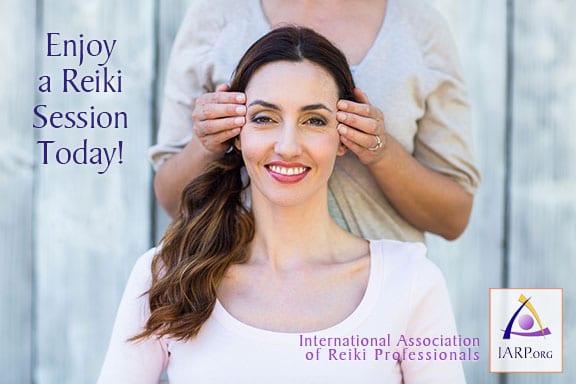
Reiki is a gentle, hands-on relaxation practice in which a trained practitioner places their hands lightly on or just above a fully clothed person, with the intention of supporting that person’s own sense of calm and balance. Sessions typically last 45 to 90 minutes. Many people describe the experience as one of the deepest relaxing rests they have ever had.

That is the short answer. But if you have arrived here curious — perhaps because a friend recommended it, perhaps because you read about it in a hospital’s integrative care program, perhaps because you felt drawn to it without quite knowing why — you probably want more than a definition. This guide covers what Reiki actually is, where it came from, what happens in a real session, what the evidence does and does not show, and how to find someone qualified when you are ready to try it.

The International Association of Reiki Professionals® has supported Reiki practitioners and teachers around the world since 1996. What follows is our sincere attempt to explain the practice clearly — including the parts that are still debated.

The meaning of the word

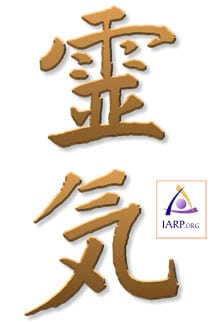
“Reiki” is a Japanese word usually translated as “universal life energy.” It combines rei, often rendered as universal or sacred, and ki, the Japanese term for the vital energy also known as qi in Chinese traditions and prana in Sanskrit ones. Many cultures have developed a concept like this — an animating force that flows through living things and is understood to ebb, flow, and become unbalanced. It is worth being precise here, because a great deal of confusion follows from imprecision: Reiki is a practice, not a belief system, a religion, or a medical treatment. You do not have to believe anything in particular for a session to feel restful, and practitioners of many faiths — and of none — practice and receive it.

Where Reiki came from

The practice as it is known today was developed in Japan in the early twentieth century by Mikao Usui, a Japanese Buddhist and lay practitioner who spent years studying meditation, healing traditions, and spiritual disciplines. Following an extended period of meditation and fasting on Mount Kurama in 1922, Usui began teaching a system of hand positions, precepts, and energy practice that he called Reiki Ryoho — Reiki healing method.

Usui taught thousands of students in Japan before his death in 1926. One of them, a naval officer named Chujiro Hayashi, refined the hand-position system and trained Hawayo Takata, a Japanese-American woman who brought Reiki to Hawaii in the late 1930s. Takata trained twenty-two masters before her death in 1980, and from that small group the practice spread across North America, Europe, and eventually the world.

This lineage matters more than it might appear. Because Reiki was transmitted teacher-to-student rather than through a central institution, different branches developed distinct emphases, hand positions, and terminology. There is no single governing authority for Reiki anywhere in the world as there are many lineages and types of Reiki at present. The Reiki types of Usui Shiki Ryoho and Usui Reiki Ryoho are considered a framework and basis that honors the original traditions. The diversity of Reiki types is part of the tradition’s richness — and it is also why choosing a practitioner or teacher thoughtfully is so important. IARP recognizes and honors all main lineages of Reiki.

What actually happens in a Reiki session

Here is the part most people are curious about, and it is far more ordinary than they expect.

You arrive and talk with the practitioner for a few minutes. They will ask what brought you in, whether you have any physical discomfort or areas to avoid, and what you are hoping for. Good practitioners ask about consent explicitly: whether you are comfortable with light touch, or would prefer their hands to hover just above your body. Either approach is entirely normal and is up to your preference.

You then lie down on a padded table — fully clothed, shoes off, usually with a blanket. The room is typically quiet, dimly lit, and often has soft music. The practitioner moves through a sequence of hand positions, generally beginning at the head and working down the body, resting each position for a few minutes. There is no massage, no manipulation, no oils, and no pressure. Most of the session is silent. Although there may be soft background music to assist in your relaxation and enjoyment of the session.

What people report feeling varies widely: warmth radiating from the practitioner’s hands, gentle tingling, a heaviness or floating sensation, waves of emotion, vivid mental imagery, or simply a profound and unfamiliar depth of relaxation. Some people fall asleep. Some feel very little during the session but notice they sleep unusually well that night. All of these are common and none of them indicate that the session “worked” or “didn’t work.”

Afterward, the practitioner will usually give you a few minutes to sit up slowly and offer water. Many suggest drinking plenty of water and resting if you can. Sessions typically cost between $60 and $150 CAD and $80 to $200 CAD at today’s rates depending on where you live and the practitioner’s experience.

Can Reiki be done at a distance?

Yes — and this is one of the most frequently asked and most debated questions in the field. Distance Reiki is offered by many practitioners over video call or by prior arrangement at a set time, with the recipient resting comfortably at home. The practitioner works with focused intention rather than physical proximity.

Some practitioners consider distance work fully equivalent to in-person sessions; others feel the in-person experience offers something distinct. Both views are held sincerely within the community. What is not in dispute is that distance sessions have made Reiki accessible to people who are homebound, live far from any practitioner, or simply prefer their own space.

What does the research actually say?

This deserves a candid answer rather than an enthusiastic one.

Reiki has been studied in clinical settings, and a growing body of research — much of it small-scale — has examined its effects on relaxation, anxiety, pain perception, and quality of life, particularly among patients undergoing cancer treatment or recovering from surgery. Some studies have reported meaningful improvements in self-reported anxiety and comfort. Others have found effects comparable to placebo, or have been limited by small sample sizes and the genuine difficulty of blinding participants in a touch-based intervention.

What can be said fairly: many people consistently report feeling calmer, more rested, and better able to cope after Reiki sessions, and the practice carries very little risk. What cannot be said: that Reiki treats, cures, or prevents any disease. It does not, and any practitioner who tells you otherwise is making a claim they cannot support,  and, according to IARP ethics, one they are not permitted to make.

This is why hundreds of hospitals in the United States and elsewhere now offer Reiki as a complementary service — alongside conventional medical care, typically for comfort and relaxation during treatment, never as a replacement for it. That distinction is not a legal formality. It is the honest position, and it is the standard IARP holds its members to.

Is Reiki safe?

For most people, yes. Reiki is non-invasive, involves no substances, no manipulation of the body, and only light touch or no touch at all. There are no known serious adverse effects.

A few sensible caveats: some people experience a temporary emotional release during or after a session — unexpected tears, or a day or two of feeling unusually tender. Practitioners generally regard this as a normal response, but it is worth knowing in advance. If you have a condition that makes lying flat uncomfortable, tell your practitioner; sessions can be adapted for a chair or a reclined position. And most importantly: Reiki is not a substitute for medical or mental health care. Continue your prescribed treatment, and tell your healthcare provider about any complementary practices you are using.

The Reiki precepts

Beyond hand positions and sessions, Reiki carries an ethical and contemplative dimension that many practitioners consider its heart. Usui taught five precepts, commonly rendered in English as:

Just for today, I will not be angry. Just for today, I will not worry. Just for today, I will be grateful. Just for today, I will do my work honestly. Just for today, I will be kind to every living thing.

The phrase “just for today” is doing quiet, deliberate work. These are not lifelong vows but daily intentions — renewable, forgiving, and achievable. Many practitioners begin each morning with them.

Learning Reiki yourself

Reiki is traditionally taught in levels, and one distinctive feature of the practice is that it is designed to be learned rather than only received.

Level I focuses on self-treatment and practice with family and friends. Level II typically introduces symbols, distance practice, and the training most practitioners hold before working with clients professionally. Master or Teacher level confers the ability to teach and initiate others. Each level involves in-person or live instruction with a teacher, and includes an attunement — a ceremony that traditions describe as opening the student’s capacity to practice.

Training length varies enormously between teachers and lineages, from weekend intensives to year-long apprenticeships. There is no universal standard amongst lineages and styles. This is precisely why a professional association matters.

How to find a good Reiki practitioner

A few practical suggestions:

Ask about their training. A practitioner should be able to tell you their level, who taught them, roughly when, and how many hours their training involved. Hesitation here is worth noticing.

Ask about professional standing. Do they belong to a professional association? Have they agreed to a code of ethics? These are ordinary questions in any other wellness profession and should be welcomed.

Notice how they talk about outcomes. A trustworthy practitioner describes Reiki as supportive and relaxing. Anyone promising to cure a condition, telling you to stop medical treatment, or discouraging you from consulting a doctor is someone to walk away from.

Trust your comfort. You are going to lie down in a quiet room with this person for an hour. If something feels off during the initial conversation, that is reason enough to keep looking.

IARP maintains a Practitioner and Teacher Directory of professional members worldwide. Every professional member has submitted documentation of their Reiki training as a condition of membership and has agreed to the IARP Code of Ethics. You can search by location, specialty, session format, and language.

Find a Reiki practitioner near you

Frequently asked questions

Do I have to remove my clothes?

No. You remain fully clothed for the entire session. Only shoes come off.

Does Reiki hurt?

No. You remain fully clothed for the entire session. Only shoes come off.

How many sessions will I need?

There is no set number. Some people come once out of curiosity; others find a regular monthly session valuable. Your practitioner should never pressure you into a package.

Can Reiki be given to children, pets, or during pregnancy?

Yes, with appropriate adaptation. Many practitioners specialize in exactly these areas.

Is Reiki covered by insurance?

Rarely, though some integrative health programs and a small number of plans include it. Ask your provider.

Can I learn Reiki online?

Views differ. Many teachers now offer live online instruction; others hold that attunement should be given in person. Both approaches are practiced sincerely — ask a prospective teacher how they teach and why.

A final word

Reiki is not a miracle and it does not claim to be. It is an hour of quiet, of intentional care, of someone’s full attention — in a world that offers very little of any of those. For many people, that turns out to be worth a great deal.

If you are curious, the next step is simple: find a practitioner whose training and manner you trust, and try one session with no particular expectation. And if the practice calls you further, there is a beautiful road from that first session to learning it yourself.

The International Association of Reiki Professionals has supported Reiki practitioners, teachers, students and personal practitioners worldwide since 1996.

Ready to experience Reiki for yourself?

Every practitioner and teacher in the IARP Professional Reiki Directory has submitted documentation of their Reiki training, has agreed to abide by the IARP Code of Ethics and is committed to providing you with the best professional Reiki experience.

Scroll to Top