
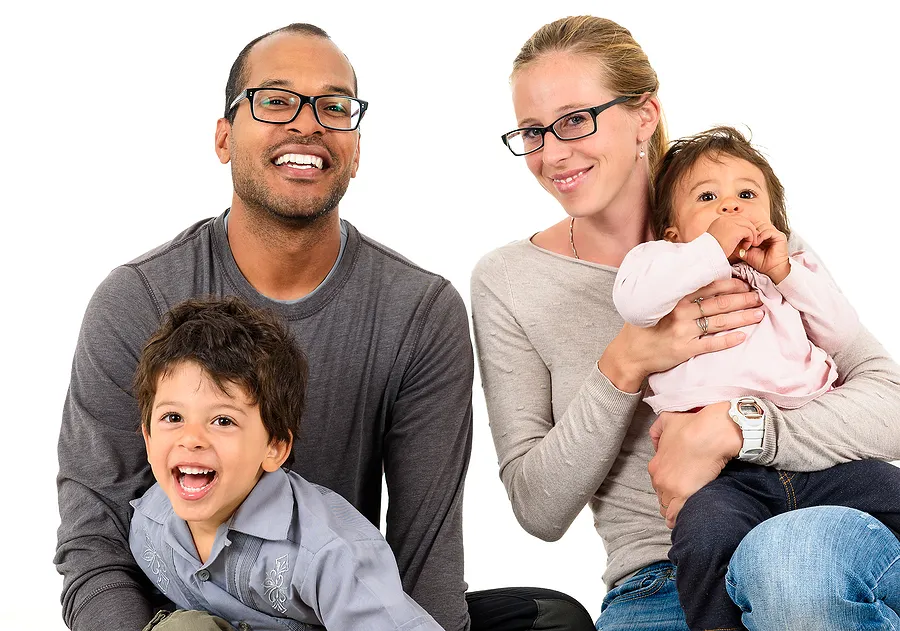
Most parents who look into Reiki for their child are not looking for anything dramatic. They have a seven-year-old who cannot settle at bedtime, a teenager carrying more pressure than seems fair, a baby who is unsettled, or a family going through something hard — a move, an illness, a loss — and they are looking for something gentle to offer.
Reiki suits that description well. It is quiet, non-invasive, requires nothing of the child, and can be offered in five minutes at bedtime or in a full session with a practitioner. Children often take to it more readily than adults do, largely because they do not spend the first twenty minutes wondering whether it works.
This guide covers what Reiki with children actually involves, how it differs by age, the safeguarding standards any practitioner working with your child should meet, how families use it at home, and where its limits are.
The International Association of Reiki Professionals has been supporting Reiki teachers and practitioners worldwide since 1996.
What Reiki is, briefly
Reiki is a gentle relaxation practice in which a trained practitioner rests their hands lightly on or just above a fully clothed person, with the intention of supporting calm and ease. There is no massage, no manipulation, and no substances involved.
Reiki is not medical or mental health care for children, and it is not a treatment for any condition. It does not replace your pediatrician, therapist, or any prescribed care. What it offers is what it offers adults — a period of calm, attentive quiet, and support for settling. For children, that can be genuinely valuable.
Why children often respond quickly
Practitioners who work with children consistently report that sessions tend to be shorter and responses faster than with adults. A few reasons are commonly offered.
Children have less to unlearn. They are not evaluating the experience, weighing whether they believe in it, or narrating it to themselves. They are simply lying there, being paid gentle attention.
They are also, generally, less chronically braced than adults. An adult nervous system that has been running on alert for twenty years takes longer to stand down than a child’s.
And children are typically honest about what they want. A child who has had enough will say so, or wriggle, or get up. Practitioners take that as complete information rather than resistance.
Age by age
Babies and infants
Reiki with babies is usually very brief — a few minutes at most — and often given while the baby is held by a parent, feeding, or falling asleep. Hands are typically held slightly off the body rather than resting on it, and any touch is very light.
Parents often use it during the unsettled hours of the evening, during teething, or simply as part of a bedtime routine. The most direct description of what it offers here is calm, unhurried attention from a settled adult — which is not nothing for a baby, and not nothing for the parent either.
The standard caution applies with extra force: a baby who is unwell, feverish, not feeding, or crying inconsolably needs a doctor, promptly.
Young children (roughly 3–10)
This is where Reiki tends to fit most easily, largely because young children accept it without needing an explanation.
Sessions are short — often 10 to 20 minutes. Children may lie down, sit in a parent’s lap, or stay in motion and receive Reiki in bursts. Practitioners commonly work with a child who is drawing, listening to a story, or playing quietly. Insisting a young child lie still for forty minutes is neither necessary nor kind.
Children of this age often describe what they feel with startling directness — warm hands, tingles, colors, sleepiness. Some fall asleep. Many ask for it again the next night, which is usually the clearest signal you need.
Teenagers
Teenagers are a distinct audience and often the ones who most want something. Anxiety, exam pressure, sleep difficulty, social stress, and the general intensity of adolescence bring many teens to Reiki — sometimes at a parent’s suggestion, sometimes from their own research.
Two things matter enormously with teenagers. The first is choice: a teenager brought to a session they did not agree to will not settle, and should not be made to. Let them decide, including deciding to stop. The second is privacy and respect: they should be spoken to directly rather than about, asked their own consent for touch, and allowed to keep the experience to themselves if they want to.
Many teenagers who respond well go on to learn Level I so they can use it themselves — which, for a young person managing anxiety, is a genuinely useful tool to own.
Older family members
The other end of family life is one of Reiki’s most common settings. Practitioners frequently work with older adults living with chronic pain, limited mobility, dementia, or the loneliness that often accompanies aging.
Sessions are adapted freely — in a chair, in a bed, in a care home, shorter and gentler than usual. For a person with dementia who may be frightened or disoriented, calm presence and gentle touch can be steadying in a way words no longer are. And in hospice and end-of-life settings, Reiki is often offered to the person and their family together.
Safeguarding: what any practitioner working with your child must do
This section matters more than any other on this page, and a good professional practitioner will agree with every line of it.
A parent or guardian stays present for the entire session. Always, without exception, for children of any age. A practitioner who suggests you wait outside, or who proposes seeing your child alone, has disqualified themselves. This protects your child and it protects the practitioner.
Your child’s own consent is required, in addition to yours. The practitioner should explain to the child, in words the child understands, what will happen — and should ask the child whether that is okay. A child who says no should be believed, and the session should not happen.
The child controls touch throughout. Hands can hover rather than rest. Any area the child does not want touched is off-limits, no explanation needed. The child can stop at any moment and should be told so explicitly at the start.
Touch stays on neutral areas. Shoulders, upper back, head, arms, hands, feet, knees. A practitioner working with a child should not touch the torso front, and never anywhere near the chest, groin, or buttocks. Hovering hands or asking the parent to place their own hands is the appropriate alternative, if this is needed at all.
The practitioner should hold appropriate professional standards — training documentation, liability insurance if available in their country, professional association membership with a code of ethics, and where their local norms expect it, a background check for working with minors.
Trust your instincts. If anything about a practitioner’s manner with your child feels off, end it. You never need a reason.
Reiki at home: families practicing together
A large proportion of the people who ask about Reiki for children end up learning it themselves, and it is worth knowing that this is a straightforward path.
Level I training teaches self-treatment and how to offer Reiki to family — which is precisely the scope most parents want. It typically takes one to two days and requires no prior experience. You do not need certification to place your hands gently on your own child at bedtime, but a class gives you structure, confidence, and a teacher to ask.
In practice, home use tends to look like this: five minutes at bedtime with hands resting on a child’s back or shoulders; a hand on a knee after a fall; a quiet moment before a school test or a dental appointment. Short, undramatic, part of the ordinary furniture of family life.
Children can learn too. Many teachers offer Level I to children, usually with a parent attending alongside. Children who learn it often use it on themselves at bedtime, on a sibling, or on the family dog. What they are really learning is a self-soothing practice they own — and that is a durable thing to give a child.
Some practitioners describe the family-wide effect as the most valuable part: a household where several people have a shared, calm, non-verbal way of offering care to one another.
What it can support — honestly
Alongside, never instead of, appropriate medical and mental health care:
Sleep and bedtime settling is far and away the most common reason families use Reiki, and the most commonly reported benefit.
Anxiety, worry, and big feelings — before school, before a procedure, after a difficult day. Many parents describe it as a way to help a child calm down.
Comfort during illness, hospital stays, or recovery, as a supportive measure alongside treatment.
Transitions and hard seasons — a new sibling, a house move, a divorce, a bereavement.
Connection. Several minutes of undivided, unhurried, undemanding attention from a parent is, on its own, a meaningful thing — and parents often report that this is what they value most about the practice, whatever else may be happening.
What it does not do: treat, cure, or prevent any illness, condition, or diagnosis in a child. If your child is unwell, in pain, not themselves, or struggling with their mental health, that is a conversation for your doctor. Reiki can sit alongside that care. It must never delay it.
Finding a practitioner for your family
Ask about experience with children specifically. Working with children is a distinct skill — pacing, language, reading a child’s cues, and knowing when to stop.
Ask about their safeguarding practice. Their answer should include, without prompting, that a parent always stays present.
Ask about training, insurance, and professional standing. Ordinary questions for anyone working with your family.
Ask how they describe what Reiki does. Supportive and calming: good. Claims about curing conditions: no.
Bring your child into the decision. Let them meet the practitioner briefly before committing to a session.
The IARP Practitioner Directory lets you filter for practitioners listing children and families as a specialty. Every professional member has submitted documentation of their Reiki training as a condition of membership and has agreed to the IARP Code of Ethics.
Find a practitioner who works with children →
Frequently asked questions
What age can a child receive Reiki?
Any age, including newborns, with sessions adapted accordingly and always with a parent present.
How long should a child’s session be?
Usually 10–25 minutes. Children often signal clearly when they have had enough.Anywhere from five to thirty minutes. Consistency matters far more than duration.
Does my child have to lie still?
No. Many practitioners work with children who are sitting, drawing, or moving about.
Is Reiki safe for children?
It is non-invasive and gentle, with no known serious adverse effects. It is not a substitute for pediatric care.
Can Reiki help my child’s ADHD, autism, or anxiety diagnosis?
Reiki does not treat any diagnosed condition. Some families use it as a calming practice alongside their child’s care team’s plan. Discuss it with that team.
Can I learn to do this for my own children?
Yes — Level I training is designed for exactly this.
Should my child be alone with the practitioner?
No. A parent or guardian should be present for the entire session, always.
A closing thought
Reiki with children is unglamorous in the best way. It is a few quiet minutes, a warm hand, a child settling. It will not solve anything large on its own, and any practitioner who promises otherwise should be avoided.
But calm is contagious in a household, and a family that has a shared way of offering it to one another tends to reach for it often.
The International Association of Reiki Professionals has been supporting Reiki practitioners, teachers, and students worldwide since 1996. Reiki is a complementary relaxation practice and is not a substitute for medical or mental health care for children or adults.