
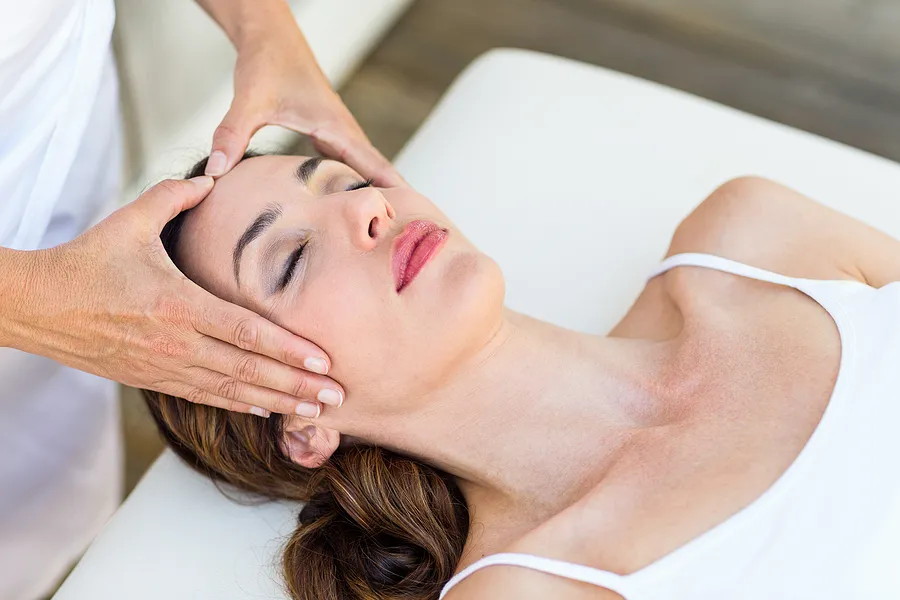
People come to Reiki for reasons they often struggle to name precisely. They are exhausted in a way sleep does not fix. They are managing a diagnosis and want something that treats them as a person rather than a chart. They are carrying grief, or pain, or a low hum of anxiety that has become so familiar they have stopped noticing it. They are not looking for a miracle. They are looking for an hour of relief.
This guide is about what Reiki actually offers people in these and similar situations — described as plainly as we know how, including the limits.
The International Association of Reiki Professionals® has supported practitioners and teachers worldwide since 1996. We hold our members to a clear standard: Reiki is offered as a relaxation and wellbeing practice that complements medical care effectively but never replaces it.
What Reiki is — and what it is for
Reiki is a gentle practice in which a trained practitioner rests their hands lightly on or just above a fully clothed person, with the intention of supporting that person’s own relaxation and sense of balance. There is no massage, no manipulation, no substances. A session usually lasts 45 to 90 minutes and is, for most people, extraordinarily restful.
The framing of its purpose is this: Reiki supports the conditions in which a person can rest, settle, and cope. It does not replace medication, therapy, surgery, or any other care your clinicians recommend. What it may offer — consistently, across a great many people’s reported experience and in research — is a reliable route into deep relaxation, a sense of being cared for, and a pause in the nervous system’s alarm.
That may sound modest. In practice, for people living with chronic stress, illness, or pain, it is not modest at all.
Stress, anxiety, and the nervous system
The most common reason people book their first Reiki session is stress — and it is where the practice’s mechanism is least mysterious.
A Reiki session places you in conditions that reliably calm the nervous system: you are lying down, warm, in a quiet dimly-lit room, with no demands on you for an hour, receiving safe and attentive touch from someone whose entire focus is your comfort. Whatever else may or may not be happening energetically, those conditions alone shift most people out of a sympathetic “fight or flight” state and toward the parasympathetic “rest and digest” state which is where the body recovers.
People frequently describe the after-effect as a kind of resetting: the shoulders drop, breathing deepens, and the mental noise quiets for a while. Some report that the calm lasts hours; others find it lasts days. Many people managing ongoing anxiety build a regular session into their routine the way others use exercise or meditation — not as a cure, but as maintenance.
Sleep
Sleep is the benefit people mention most often and expect least.
It is common for someone to fall asleep on the table during their very first session — sometimes to their own embarrassment if they do not know this may happen, though practitioners universally take it as a good sign. More significantly, many people report unusually deep sleep the night after a session, and some find that a regular practice helps with a long-standing pattern of restless nights or difficulty switching off at bedtime.
If sleep is your reason for trying Reiki, a practical suggestion: book a late afternoon or evening session rather than a morning one, and give yourself a quiet transition afterward rather than heading straight into traffic. Sleep problems have many causes, and persistent insomnia deserves a conversation with your doctor — but as a supportive practice alongside that, Reiki is low-risk and can be frequently helpful.
Living with pain
Pain is complicated, and it deserves careful language.
Reiki does not remove the physical cause of pain. What people living with chronic pain frequently report is a change in their relationship to it during and after a session — a sense that the pain has moved further into the background, that the accompanying tension has eased, or that they feel less braced against it. Pain researchers have long recognized that the experience of pain involves the nervous system, attention, stress, and emotional state as well as tissue damage, which offers a plausible frame for why a deeply relaxing practice might change how pain is experienced without changing its source.
Reiki is often used alongside physical therapy, pain management programs, and medication — never instead of them. Tell your practitioner where you hurt and what positions are uncomfortable; a good one will adapt the session, work with you seated or reclined, and keep hands off any area you prefer they avoid.
Reiki in cancer care and serious illness
This is where Reiki has been most widely adopted in conventional medical settings, and the reason is worth understanding.
Hundreds or possibly thousands of hospitals and cancer centers now offer Reiki or similar therapies as part of integrative care programs. They do not offer it as a treatment for cancer. They offer it because patients undergoing demanding treatment often experience anxiety, nausea, fatigue, sleeplessness, and a profound sense of being handled rather than held — and because a gentle, non-invasive, low-risk practice that provides comfort and calm has a legitimate place alongside oncology.
Reiki Practitioners working in this area need specific knowledge: awareness of ports, surgical sites, and areas to avoid; understanding of treatment schedules and when a patient is likely to be most fatigued; care with immunocompromised patients; and the emotional steadiness to sit with people who are frightened. If you or someone you love is in treatment, look for a practitioner with experience in oncology support and tell them exactly where you are in your treatment. Always tell your oncology team about any complementary practice you are using.
The same principles apply in hospice and end-of-life care, where Reiki is often offered to both patients and family members — sometimes as one of the few things that can still be offered when active treatment has stopped.
Emotional wellbeing and difficult seasons
People often arrive at Reiki during grief, burnout, life transitions, or the aftermath of trauma — periods when talking has been exhausted and the body is carrying what words have not resolved.
It is not uncommon to experience emotional release during a session: unexpected tears, a wave of feeling, a memory surfacing. Practitioners are trained to hold that quietly without probing or interpreting. Some people find that after a session or two greater understanding and peace may follow.
An important boundary here: Reiki is not psychotherapy and Reiki practitioners are not mental health professionals unless they hold separate qualifications. A trauma-informed practitioner will work with consent, offer choice about touch, keep you oriented and in control of the session, and refer you to appropriate care rather than attempting to work therapeutically. If you are managing depression, PTSD, or another mental health condition, Reiki may be a supportive addition to your care — alongside, not instead of, treatment from qualified professionals.
What the research shows
Reiki has been studied in clinical settings, most substantially with patients undergoing cancer treatment, surgery recovery, and in populations experiencing anxiety. Several studies have reported improvements in self-reported anxiety, comfort, and quality of life. Others have found results comparable to placebo, or have been limited by small sample sizes, absence of adequate control conditions, and the genuine methodological difficulty of blinding participants in a touch-based practice.
What can fairly be said: many people consistently report feeling calmer, more rested, and better able to cope; the practice carries very low risk; and it is increasingly accepted in mainstream settings as a comfort measure.
What cannot be said: that Reiki cures or prevents any disease or condition. Any practitioner who tells you it does is making a claim the current research evidence does not support. Finding a practitioner instead who knows the benefits and limitations of the modality and abides by a proper Code of Ethics is the right response.
Is Reiki safe?
For most people, yes. There is no medication, no manipulation, no invasive element — only light touch or no touch at all, at your choosing. No serious adverse effects are recognized.
Sensible caveats: temporary emotional tenderness after a session is common. If lying flat is uncomfortable, ask for a seated or reclined session. And the essential one — continue your prescribed care and tell your healthcare providers about any complementary practices you use. Good Reiki practitioners encourage exactly this.
Choosing the right practitioner for your situation
If you are coming to Reiki for a specific reason, matching the practitioner to that reason matters.
Ask about relevant experience. A practitioner who regularly supports oncology patients, works in hospice, specializes in trauma-informed practice, or has experience with chronic pain brings knowledge a generalist may not.
Ask about their training and professional standing. What level are they trained to, who taught them, and do they belong to a professional association with a code of ethics? These are ordinary questions in any wellness profession.
Listen to how they describe outcomes. Supportive, calming, complementary — good. Cure, heal, treat, “you won’t need your medication” — leave.
Tell them the whole picture. Your diagnosis, your medications, your surgical history, what hurts, what you would rather they avoid. They cannot adapt what they do not know.
The IARP Professional Practitioner and Teacher Directory lets you search by location and by specialty — including oncology support, hospice and end-of-life care, trauma-informed practice, chronic conditions, and more. Every professional member has submitted documentation of their Reiki training as a condition of membership and has agreed to the IARP Code of Ethics.
Find a practitioner who specializes in what you need →
Frequently asked questions
What does Reiki actually help with?
Most people report relaxation, reduced stress and anxiety, better sleep, greater comfort during illness or treatment, and an improved sense of coping. It is a supportive practice, not a treatment for any specific condition.
Can I have Reiki while undergoing medical treatment?
Generally yes, and many hospitals offer it. Tell both your practitioner and your medical team.
How many sessions do I need?
There is no set number. Some people come once; others find monthly sessions valuable. A practitioner should never pressure you into a package.
Will I feel something?
Often warmth, tingling, heaviness, or deep calm — but some people feel little during the session and notice the effect afterward. Neither means it did or did not work.
Is Reiki safe during pregnancy?
Many practitioners specialize in prenatal support with appropriate positioning. Check with your midwife or doctor as well.
Can Reiki help my anxiety instead of therapy or medication?
No. It may be a helpful addition alongside them. Do not change or stop any prescribed treatment without speaking to your prescriber.
A closing note
Reiki does not promise to fix you, and it should be treated with suspicion by anyone who says it will. What it offers is quieter and, for a great multitude of people, genuinely valuable, often priceless: an hour of stillness, safe and attentive care, and a nervous system given permission to stand down.
If that is what you need right now, Reiki is a most reasonable and beneficial thing to try.The International Association of Reiki Professionals has supported Reiki practitioners, teachers